John Elliot – Rawburn Aberdeen Angus
Feed efficiency is emerging as a significant opportunity to improve profitability in beef production. At the British Cattle Breeders Conference 2026, John Elliot of Rawburn Aberdeen-Angus explained how focusing on feed conversion is shaping the future direction of his breeding programme and delivering measurable benefits for commercial beef farmers.
Based in the Scottish Borders, the Rawburn herd was established in 1972 and has built a reputation over the past 25 years for producing high-performance Aberdeen-Angus genetics. Today the business runs across three farms, managing around 2,000 acres and calving just over 400 cows annually. The majority of the herd is pedigree Aberdeen-Angus along with a small number of Limousins.
Genetics remain the core of the enterprise. Around 130 bulls are sold each year, with roughly 85% going into commercial beef herds and the remainder into dairy systems. Rawburn genetics are exported widely, particularly across mainland Europe, North America and Australia.
Why Feed Efficiency Matters
John explained that the decision to focus on feed efficiency was driven by simple economics. Around 75% of the costs involved in beef production are feed related, meaning improvements in feed conversion offer significant potential savings.
Feed efficiency is also highly heritable, with estimates around 0.45 — higher than many other key production traits. This means it can be effectively improved through breeding.
The initial idea of measuring feed efficiency was explored in 2016, but the cost of installing a system was felt to be too high at that point in time. Instead, the Elliots introduced genetics from North America that had already been selected for the trait.
A visit to progressive herds in the United States led John to Nichols Angus Ranch in Iowa, where he identified the bull Nichols Expectation. Although a significant investment, the bull has had a major influence across the Elliot’s herds. In just six years he has featured as sire or grandsire of many of the highest-ranking Aberdeen-Angus animals recorded in the UK herdbook.
Investing in Feed Efficiency Testing
However, by 2020, they felt they had reached the limits of progress using existing data alone and decided to invest in a dedicated feed efficiency testing system.
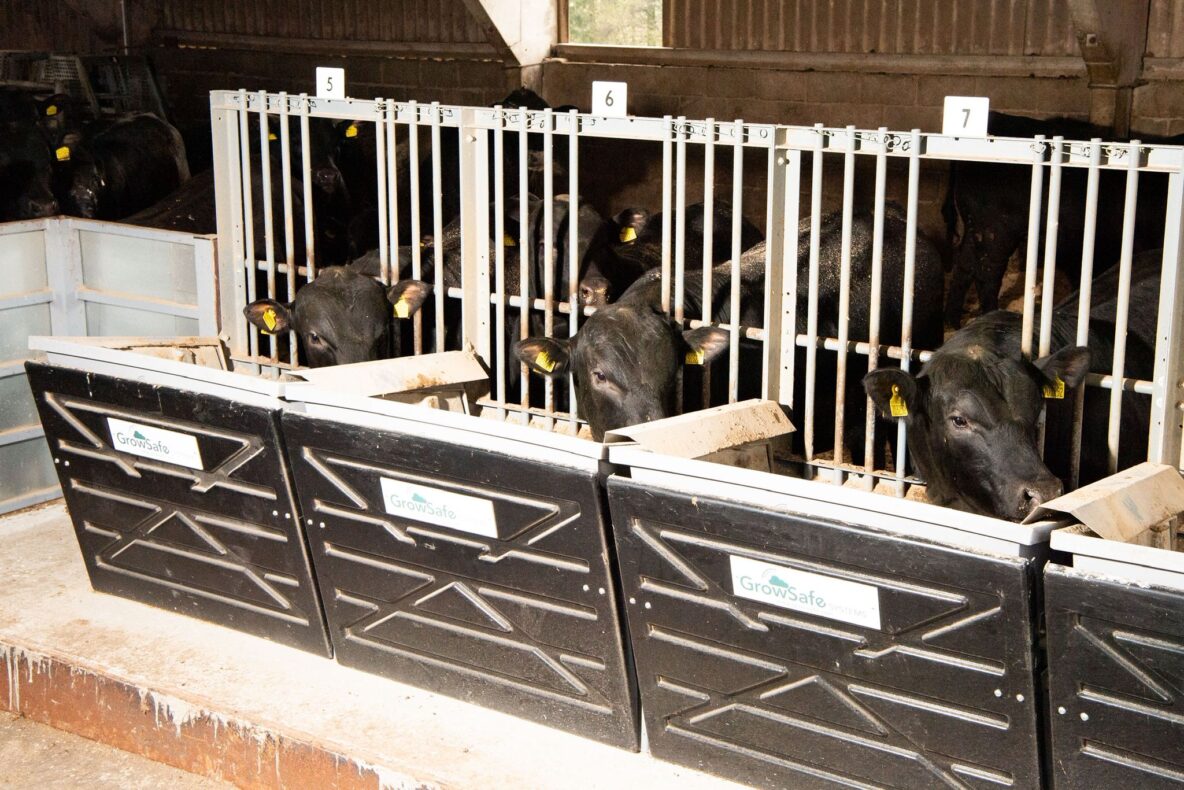
The unit includes eight electronic feed bunks capable of testing around 70 bulls per trial. Each animal carries an electronic tag, allowing the system to record individual feed intake every time it visits the bunk. Cattle also weigh themselves automatically at the water troughs, providing continuous data on weight gain.
Each trial runs for around 70 days, including a 10-day warm-up period. During that time every mouthful consumed is recorded, with feed dry matter analysed regularly to ensure accuracy.
Variation Within the Herd
One of the most striking findings from the early trials was the level of variation in feed efficiency between animals.
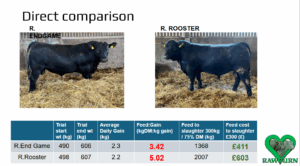
Through the trial period, some bulls required just over three kilograms of dry matter to gain one kilogram of bodyweight, while others needed more than five kilograms to achieve the same growth. Despite this, many appeared almost phenotypically identical.
A comparison between two bulls highlighted the difference. Both started and finished the trial at almost identical weights and achieved the same daily gain. However, one required significantly less feed for the gain.
When translated into financial terms on a commercial farm, the difference amounts to nearly £200 in feed cost to reach slaughter weight. Even if only half of that advantage is passed on to progeny, the potential savings for the industry are substantial.
Breeding for Efficiency
While phenotype alone provides little indication of feed efficiency, pedigree patterns are becoming increasingly clear.
The trials at Rawburn have shown that certain cow families consistently produce more efficient progeny, confirming that the trait can be improved through breeding decisions. Within a single generation, the herd has already recorded measurable improvements in feed conversion.
Age also plays a role, with younger cattle converting feed more efficiently. This reinforces the benefits of systems that allow animals to finish earlier.
Comparisons between breeds within the Rawburn testing programme have shown that cattle can perform similarly for feed conversion at the top end. However, Angus cattle tend to consume more feed per day and achieve higher daily weight gains, allowing them to reach slaughter weight sooner.
Industry Feedback and Future Direction
Commercial feedback has provided further validation of the breeding programme.
Working with processors supplying premium Angus beef, Rawburn genetics have demonstrated clear improvements in finishing performance. In one example, cattle reached the same carcass weights around 40 days earlier, delivering both financial and environmental benefits.
The introduction of feed efficiency data has also strengthened demand from progressive producers and breeding programmes. It has opened new international opportunities, including a partnership with an Australian Angus operation focused on producing carbon-neutral beef, where Rawburn genetics are now being used through embryos and semen.
Driving Efficiency in Beef Production
John concluded that feed efficiency represents one of the most significant opportunities for improving profitability in beef production.
By identifying cattle that convert feed more efficiently, breeders can help commercial producers reduce costs, improve environmental performance and increase output per acre.
For Rawburn, combining conventional performance recording with modern feed efficiency testing is helping to push the breeding programme forward — supporting the development of Aberdeen-Angus cattle that are increasingly efficient, productive and profitable for commercial beef producers.