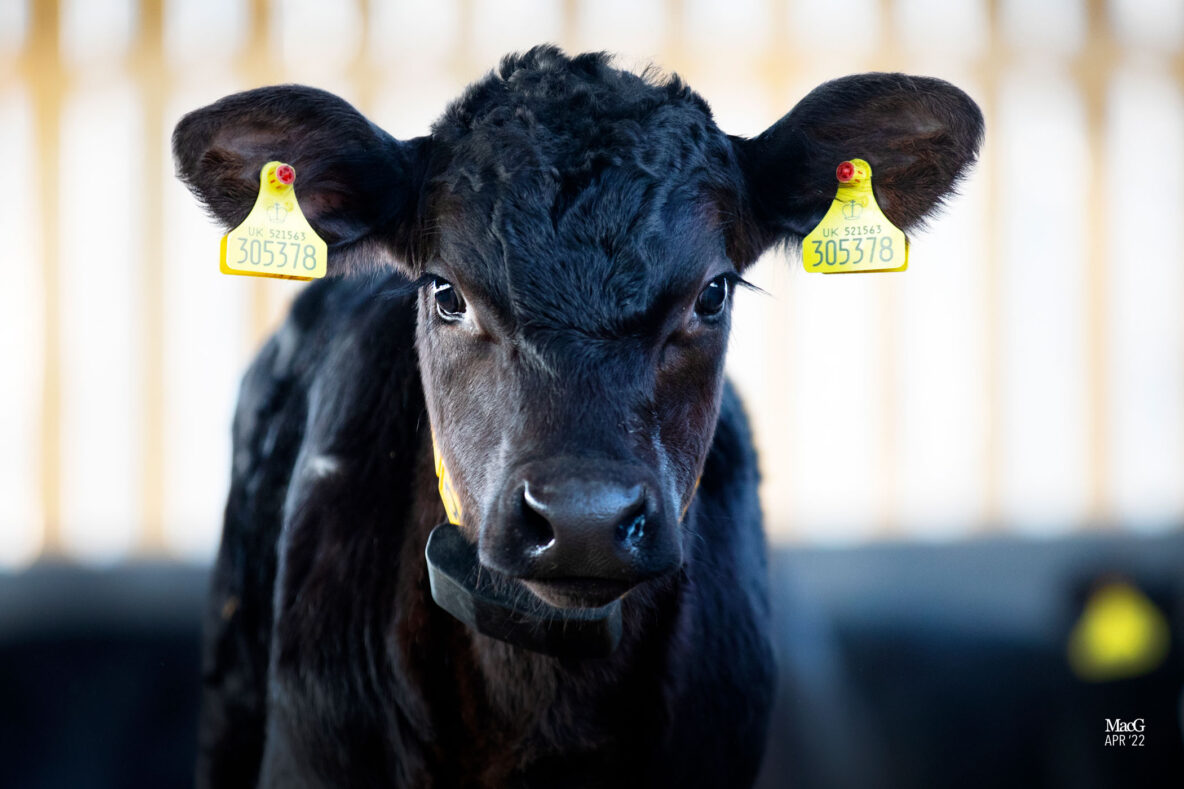
Aberdeen-Angus Cattle Society launches new Dairy Beef Index to support improved sire selection
The Aberdeen-Angus Cattle Society has launched a new Dairy Beef Index to help dairy farmers pick the right genetics by identifying Aberdeen-Angus sires suited to maximising dairy cow performance alongside the commercial potential of the calf.
It is the first dedicated index of its kind to be introduced by a UK beef breed society and brings together a range of profit-focused traits into one dairy-focused selection tool.
Robert Gilchrist, chief executive officer of the Aberdeen-Angus Cattle Society, says dairy farmers have previously had to consider individual estimated breeding values (EBVs) when selecting Aberdeen-Angus walking bulls – the new index now gives them a clearer overall picture of a bull’s suitability.
“The Dairy Beef Index brings together the traits that matter from both a dairy and beef perspective, giving farmers greater confidence that the genetics they select will suit the dairy herd while also producing a calf that will perform well in a beef system,” he says.
“It draws on a range of economically relevant EBVs, spanning calving ease and gestation length, alongside growth measures such as 200- and 400-day weights, and carcass traits.
“Intramuscular fat has also been included in recognition of the growing importance and value being placed on eating quality.”
Mr Gilchrist says the new Dairy Beef Index aligns closely with the ambitions of the GB Calf Strategy 2025-2030, of which the Aberdeen-Angus Cattle Society is a signatory, to ensure every calf is reared with care, purpose and value.
“With more beef now coming from the dairy herd, the breeding decisions made at dairy level have an increasingly important bearing on both dairy efficiency and the value of cattle entering the beef supply chain,” he says.
“Selecting genetics that support easy calving and efficient dairy cow performance, while also producing a calf with strong growth and carcass potential, can help support a more sustainable system from both a dairy and beef perspective.”
Index values are expressed as the expected profit per calf born, in pounds, relative to the Aberdeen-Angus genetic baseline, with the value lying in the difference between bulls.
“For example, if Bull A has an Index value of £120 and Bull B £70, each calf from Bull A would be expected to return £50 more than one from Bull B, based on the combined value of calving, growth and carcass performance,” Mr Gilchrist explains.
For dairy farmers wanting to source walking bulls or semen direct from farm or through sales, he believes this is a significant step forward.
“Having greater choice of genetics while still being able to make a data-led breeding decision is of real value to the dairy sector,” he says.
“There is now a clear and consistent way for dairy farmers to compare a much wider pool of Aberdeen-Angus genetics and identify bulls with the combination of traits best suited to their own dairy system.”
The Dairy Beef Index is now available for all bulls registered with the Aberdeen-Angus Cattle Society and information can be accessed through The Society’s website.